
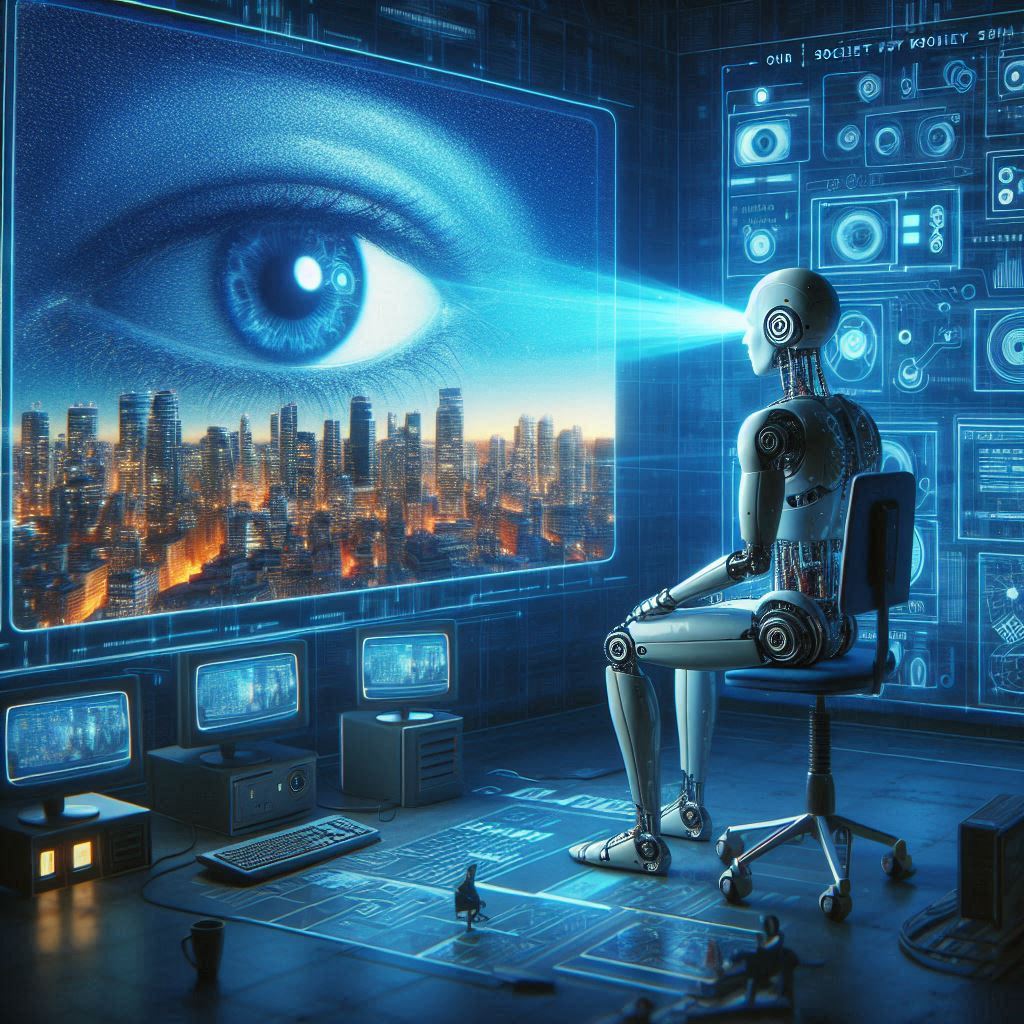
I am writing these lines from the Ortega-Marañón Foundation in Madrid, sitting in the same space where José Ortega y Gasset used to walk and develop part of his philosophical thought.
The emotion I feel reflecting on the future of the Humanities from this place steeped in intellectual history is difficult to describe. The walls of this building have witnessed some of the most profound reflections on the human condition in the 20th century, and now, in the 21st century, we find ourselves at a crossroads similar to the one Ortega analyzed in "The Revolt of the Masses": the need to rethink the role of humankind in the face of the technological changes that are transforming our society.
The technological paradox and the Humanistic Renaissance
The dizzying development of Artificial Intelligence has created one of the most fascinating paradoxes of our time. While headlines herald each new technological advance as a further step toward the obsolescence of traditional human thought, a very different reality is emerging: the more sophisticated AI becomes, the more evident and valuable the essentially human qualities that the Humanities have cultivated for centuries become.
This paradox manifests itself in surprising ways. Systems like GPT-4 can generate seemingly sound academic essays, DALL-E can create stunning works of art, and conversational models can hold dialogues that appear deeply thoughtful. Yet each of these technological achievements, rather than diminishing the value of the humanities, has sparked a renewed interest in understanding what makes the human experience unique. Every advance in the artificial replication of human capabilities compels us to delve deeper into understanding our own nature.
Let's consider the field of creative writing. Current language models can generate coherent and technically correct stories in a matter of seconds. This ability, which might initially seem like a threat to human writers, has sparked a renewed interest in authenticity in narrative. The question is no longer simply whether a story is well-structured or grammatically correct, but whether it conveys a genuine human experience, whether it captures the contradictions and complexities that only someone who has lived can understand. Literature departments in universities, far from becoming obsolete, are transforming into spaces where the difference between mere content generation and true artistic expression is explored.
In the field of visual arts, the proliferation of AI-powered image-generating tools has sparked a fascinating debate about the nature of creativity. While these tools can produce technically impressive images based on existing patterns, human artists are rediscovering their role as creators of meaning. The difference between an AI-generated image and a human work of art lies not in technical perfection, but in intention, context, and the ability to consciously break with established conventions.
Philosophy, which some predicted would be replaced by automated logic systems, is experiencing an unprecedented renaissance. The ethical dilemmas posed by AI have revealed the inadequacy of purely algorithmic approaches to addressing complex moral questions. What is “good”? What is “bad”? The need for philosophers who can navigate the murky waters of ethics in the digital age has never been more urgent. Fundamental questions about consciousness, free will, and the nature of knowledge, far from being resolved by AI, have become more relevant and complex than ever.
In the field of education, the availability of instant information and automated tutoring systems has led to a reevaluation of the role of the human teacher. True education, we have discovered, does not consist of the efficient transmission of information, but rather in the development of critical thinking, intellectual curiosity, and practical wisdom. These are precisely the qualities that the humanities have traditionally cultivated and that are now proving to be essential.
Historiography and cultural studies are also undergoing a paradoxical transformation. In an era where algorithms can analyze vast amounts of historical data in search of patterns, it has become increasingly clear that true historical understanding requires more than data analysis. It requires empathy, contextualization, and the ability to grasp the human motivations underlying historical events.
Even in the business world, traditionally skeptical of the practical value of the humanities, there is a growing recognition of the importance of the "soft skills" these disciplines cultivate. Leading technology companies are hiring philosophers, anthropologists, and psychologists, not only to address ethical issues, but because they recognize that the next frontier in technological innovation requires a deeper understanding of human behavior and experience.
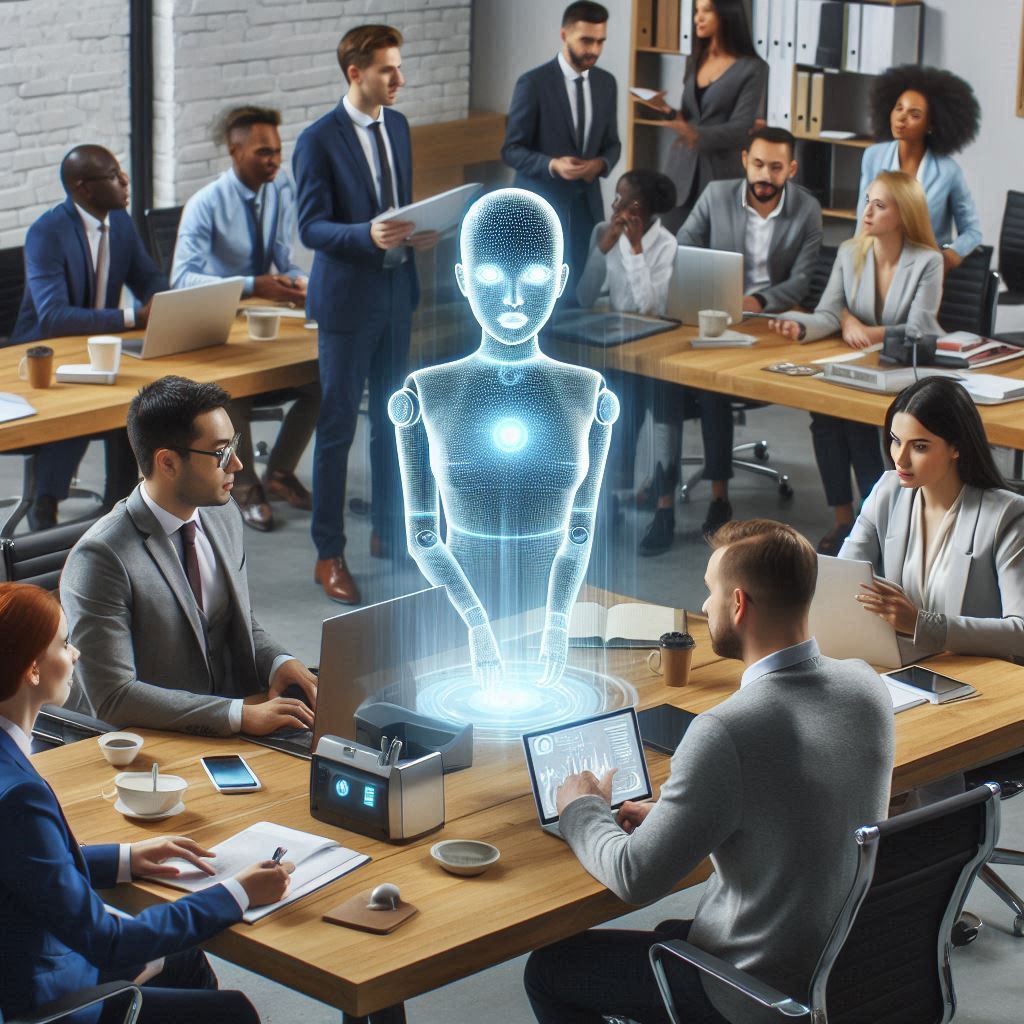
This technological paradox reveals a fundamental truth: the advance of AI is not making the humanities obsolete, but rather revealing their true value. In a world where machines can perform increasingly complex cognitive tasks, the essentially human capacities that the humanities cultivate—critical thinking, creativity, empathy, practical wisdom—become more valuable, not less.
The digital mirror of our prejudices
However, Artificial Intelligence also reveals uncomfortable truths about our society, truths that, as a society, we would prefer not to see: bias.
When AI systems reproduce discriminatory behaviors, they are not malfunctioning. On the contrary, they are perfectly fulfilling their purpose of identifying and replicating patterns present in the data we have fed them. They are a digital mirror that reflects, with almost painful precision, the prejudices and inequalities we have normalized for generations. They place our shortcomings right before our eyes, with the same efficiency, effectiveness, and speed with which they generate an image or write an essay.
I find it amusing that the tech industry's initial response has been to develop mechanisms (like RAG or feedback learning) to correct these deviations. These systems act as sophisticated filters that attempt to "clean" AI outputs of unwanted biases. However, this technical approach, while necessary in the short term, reveals a superficial understanding of the problem. It's like trying to purify the water of a polluted river at its mouth, instead of addressing the source of the pollution—a way of looking the other way, trying to correct the results instead of attacking the root causes.
When we analyze in depth the data used to train these systems, we find that bias is not an anomaly, but an inherent characteristic. Historical texts, news reports, social media conversations, image descriptions—this entire body of information is permeated with prejudices that we have accumulated over centuries. In its learning process, AI absorbs and faithfully replicates these structures of power and discrimination.
The examples are as numerous as they are troubling. Natural language processing systems tend to associate prestigious professions with masculine pronouns, while caregiving or administrative jobs are automatically linked to feminine pronouns. This association is not a programming error, but the result of analyzing millions of texts where these associations have been consistently repeated. Facial recognition algorithms show significantly higher error rates when analyzing the faces of Black or Asian people, not due to a technical flaw, but because training datasets have historically been biased toward Caucasian faces.
Even in seemingly neutral fields like image generation, biases reveal themselves in telling ways. When these systems are asked to generate images of "a successful person" or "a nice neighborhood," the representations tend to reproduce Western and upper-middle-class stereotypes. It's not AI deciding what success or prosperity should look like; it's simply reflecting the associations we've collectively built through decades of advertising, media, and popular culture.
Attempts to correct these biases through technical adjustments, while well-intentioned, often result in a form of digital window dressing that masks but does not solve the underlying problem. When we force an AI system to produce "neutral" or "balanced" results, we are treating the symptom while ignoring the disease. Moreover, this approach can be counterproductive by creating a false sense of progress that distracts us from the necessary social transformation.
The real lesson this digital mirror offers is not about the limitations of technology, but about the shortcomings of our society. Every bias identified in an AI system is an invitation to examine the social structures that generated it. Every prejudice that emerges from these systems is a call to action to transform not only our algorithms, but also our institutions, our practices, and our mindsets.
Historical responsibility
This revelation confronts us with an inescapable historical responsibility, one that transcends mere technological development to delve into the very heart of our social structure. We find ourselves at a unique moment in human history, where our technological creations act as an amplifying mirror of our collective values, prejudices, and behaviors. Artificial intelligence, in its apparent neutrality, reflects back a stark image of who we are as a society.
The challenge, therefore, does not lie simply in creating better algorithms or implementing more sophisticated bias control systems. These technical solutions, while necessary in the short term, are insufficient to address the root of the problem. True transformation must occur in the very fabric of our society, in the way we educate, in the values we transmit, and in the structures that perpetuate inequality.
Humanistic education is emerging as the cornerstone of this transformation. It's not simply about incorporating subjects like Philosophy, Literature, or History into curricula, but about completely reimagining the purpose of education in the digital age. We need to cultivate individuals capable of critical thinking, questioning established systems, and envisioning alternative futures. Empathy, traditionally considered a "soft skill," must be recognized as a fundamental competency in an increasingly interconnected and complex world.
The social and economic structures we have inherited from the past require a profound and courageous overhaul. Algorithms that exhibit gender bias in job selection merely replicate decades of systematic discrimination. The solution lies not in programming exceptions into the code, but in dismantling the invisible barriers that have historically prevented equal access to opportunities. This entails rethinking everything from selection processes to work-life balance policies, from leadership models to power structures within organizations.
Historical responsibility extends to the realm of cultural production as well. The content we create today, the stories we tell, the images we produce, will be the data that feeds the Artificial Intelligence systems of the future. We have both the opportunity and the duty to create a cultural body of work that reflects the values of equality, respect, and dignity that we want to see replicated in our technological creations.
The role of media and social networks is crucial in this transformation. These channels not only reflect social reality but actively shape it. The way we represent different social groups, how we narrate conflicts, which voices we amplify and which we silence—all of this contributes to building the biases that we later find in our AI systems.
Public policies must evolve to address these challenges comprehensively. It is not enough to legislate against discrimination: we must create regulatory frameworks that actively promote inclusion and diversity in all areas of society. This includes everything from educational policies to regulations on the development and deployment of Artificial Intelligence systems, ensuring that technology serves as a tool for empowerment and not for perpetuating inequalities.
Academia, especially the humanities, has a fundamental role to play in this transformation process. Researchers in these disciplines must work closely with AI developers, not only to identify and correct biases, but also to contribute to the creation of systems that reflect a deeper and more nuanced understanding of the human experience. Interdisciplinarity is not an option, but an imperative.
This historical responsibility calls upon us all: educators, politicians, business leaders, developers, artists, and citizens. We cannot simply delegate to technology the solution to problems that are fundamentally human.
The present moment demands a profound cultural revolution, a rethinking of our collective values and behaviors. Only in this way can we ensure that the artificial intelligences of the future reflect the best of our humanity, and not its darkest aspects.
Conclusion: A new digital humanism
From this historic building in Madrid, where the ideas of Ortega y Gasset still resonate within the walls, it becomes clear that the true challenge is not competing with AI, but rather using it as a tool to enhance our humanity. The future belongs not only to programmers and engineers, but also to philosophers, writers, artists, and all those who help us understand and express what it means to be human and what it means to be human.
AI does not mark the end of the humanities, but their renaissance. In a world where machines can increasingly perform cognitive tasks, our capacity to feel, create, question, and dream becomes more valuable than ever. The new digital humanism does not reject technology, but embraces it as a tool to explore and expand our humanity.
As Ortega y Gasset taught us, each generation has its own historical mission. Ours is to ensure that in the age of AI, humanity not only survives but flourishes. And for that, the humanities are not a luxury, but a vital necessity.
Leave a Reply