
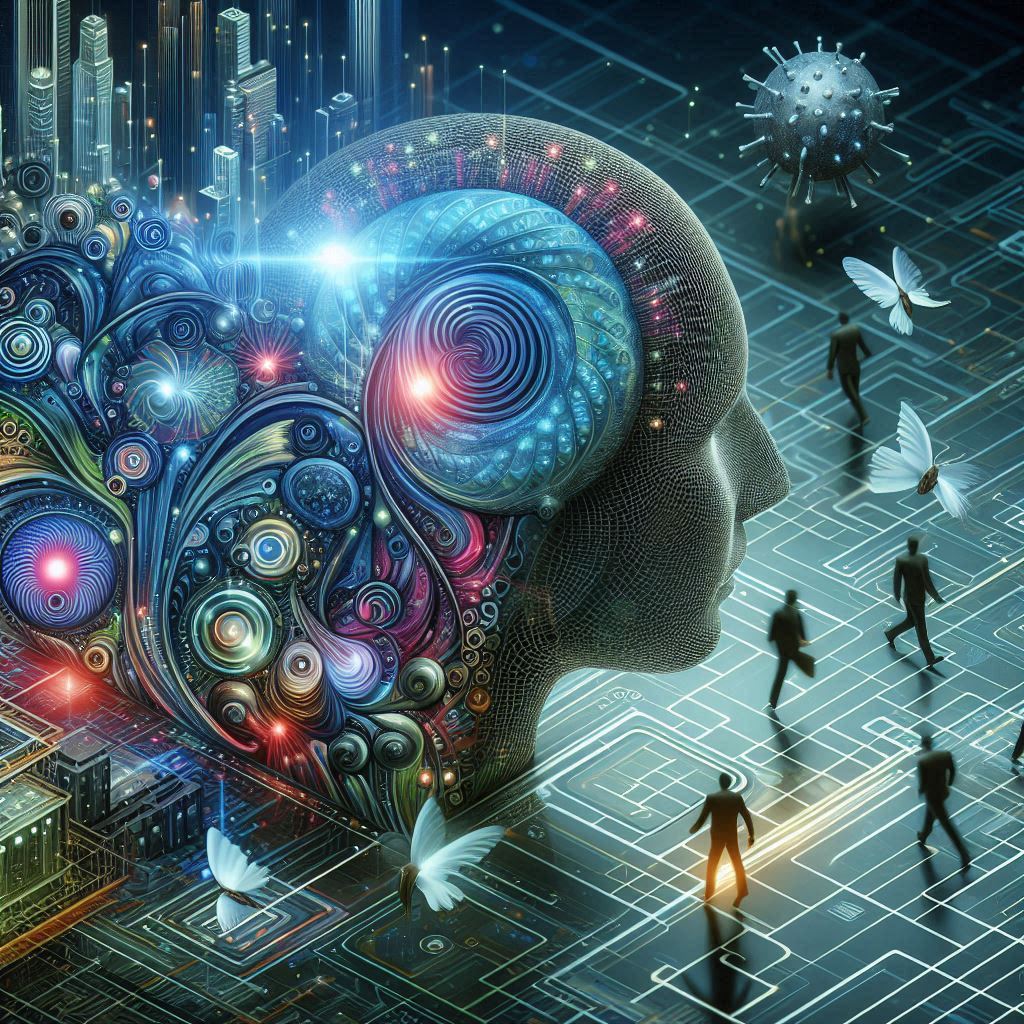
Semantics represents a critical field of innovation in the development of modern Artificial Intelligence. Beyond processing data, the ability to understand the deep meaning of language and concepts opens new frontiers for technological and business transformation.
The Challenge of Semantic Comprehension
Current artificial intelligence models have demonstrated an impressive capacity for processing information, but they still face significant limitations in true semantic understanding. Interpreting context, grasping the subtleties of language, and making complex inferences remain largely unexplored territories.
For example, language models like GPT can generate convincing text, but they often lack a deep understanding of the meaning behind the words they produce. This limitation becomes apparent in scenarios where context is crucial: if a user asks an ambiguous question or one with multiple possible interpretations, the model might offer a response that, while syntactically correct, is not appropriate to the context.
A more critical case arises in the automation of decisions in financial services. For example, when evaluating mortgage applications, an AI system with limited semantic capabilities might misinterpret a phrase like "satisfactory payment history." If the system assumes that "satisfactory" implies full compliance with obligations, it could approve a mortgage for an applicant who, in reality, had frequent late payments but never defaulted. This type of semantic error could lead to incorrect decisions with a significant financial impact on both the institution and the user.
Semantic understanding is also challenged by cultural variations, dialects, and industry-specific contexts. Developing systems capable of overcoming these barriers remains one of the greatest challenges in the field of artificial intelligence.
Emerging Business Models
A business model describes how an organization creates, delivers, and captures value. It is the strategic foundation that defines how a company operates, what it offers its customers, how it generates revenue, and how it manages its key resources and activities. Designing an effective business model requires a thorough understanding of the market, customers, and available resources.

A business model is not static; it must be constantly reviewed and adjusted in response to changes in the market and competition. Companies that adopt a flexible and innovative approach to designing their business models are more likely to succeed in a constantly evolving business environment.
In the context of artificial intelligence and semantics, business models are evolving to leverage the potential of these technologies for value creation. The ability of machines to interpret and understand deep meanings is transforming not only business processes, but also how organizations interact with their customers and manage their operations.
The following table lists some of the emerging business models that are arising thanks to advances in semantics and AI:
| Model | Worth |
| Specialized Semantic Consulting | Implement AI systems with advanced semantic capabilities; optimize knowledge extraction from large volumes of data; and develop more intuitive natural language interfaces. |
| Intelligent Knowledge Platforms | Interpreting relationships between concepts, generating automatic insights, and facilitating decision-making based on deep understanding. |
| Semantic Translation and Interpretation Solutions | Translating not only words, but cultural and contextual meanings. Facilitating more accurate intercultural communication. Supporting complex multilingual communication. |
Ethical Considerations and Future Challenges
The implementation of advanced semantic systems brings with it a set of ethical considerations and challenges that organizations must address to ensure the responsible development and use of these technologies. Some of the key points include:
- Transparency in algorithmsIt is essential that AI systems be understandable and auditable. The "black box" that characterizes many current models must be replaced by methods that allow users to understand how and why certain decisions are made.
- Responsible privacy managementSince semantic understanding involves analyzing large volumes of data, it is essential to protect personal information and ensure compliance with privacy regulations, such as the GDPR in Europe.
- Mitigation of inherent biasesAI models often inherit biases from the data they are trained on. In the case of semantics, this can lead to erroneous or discriminatory interpretations. Organizations must implement strategies to identify and correct these biases.
- Robust ethical frameworksIt is essential to develop ethical principles to guide the design, implementation, and use of semantic systems. This includes defining clear boundaries on how the technology will be used and ensuring that its impact is positive for society.
- Equitable access to technologyThe adoption of semantic capabilities should not widen the digital divide. It is crucial to ensure that these tools are accessible to organizations of different sizes and sectors.
- Sustainability and energy consumptionLarge-scale language models, fundamental for semantic understanding, require significant amounts of computational resources. Designing more energy-efficient systems is a critical challenge for minimizing their environmental impact.
Addressing these considerations is not only an ethical imperative, but also an opportunity to build trust with users and position ourselves as leaders in such a competitive market. Ethical reflection and innovation must go hand in hand to ensure a sustainable and equitable future in the development of semantic artificial intelligence.
Conclusion
Semantics in artificial intelligence is not just a technological advancement, but a revolution in how machines can understand, interpret, and generate knowledge. Organizations that strategically invest in these capabilities will be better positioned to lead the next generation of intelligent solutions.
Leave a Reply